The HUBERTUS MOUNTAIN REFUGIO
Love of One's Homeland
High up. On the mountain. In the heart of the Nagelfluh Nature Park. Surrounded by breathtaking mountain peaks.
In a high valley in the Allgäu.
There you’ll find the HUBERTUS Mountain Refugio Allgäu.
A wellness and spa hotel in the Allgäu. In a whole new dimension. Warm hospitality. Meets a cozy atmosphere. Meets modern design. Paired with unique moments of relaxation. In our new Mountain Spring Spa.
Featuring an infinity pool. A Japanese onsen bath. A natural swimming lake fed by Allgäu springs. An Alpine Zen garden. A sauna area with a plunge pool. And unique treatments.
Come up. To unwind.
Experience HUBERTUS. As a source of strength. As a place where you can do anything, but don’t have to do anything. Just as keys unlock rooms, we open up a unique experience for you—one filled with encounters, experiences, and adventures that enrich you, fulfill you, and give you the opportunity to discover something entirely new:
yourself.
, there is a frenzied standstill.
In the world up here, there is a soothing transformation.
And it has always been that way."
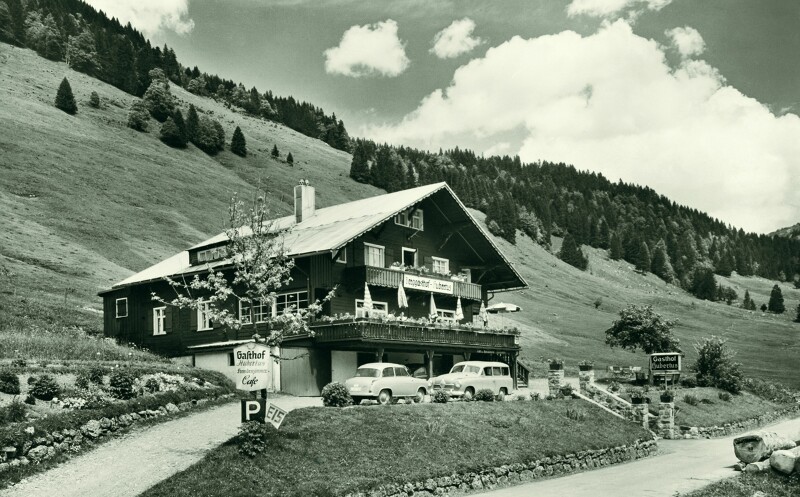
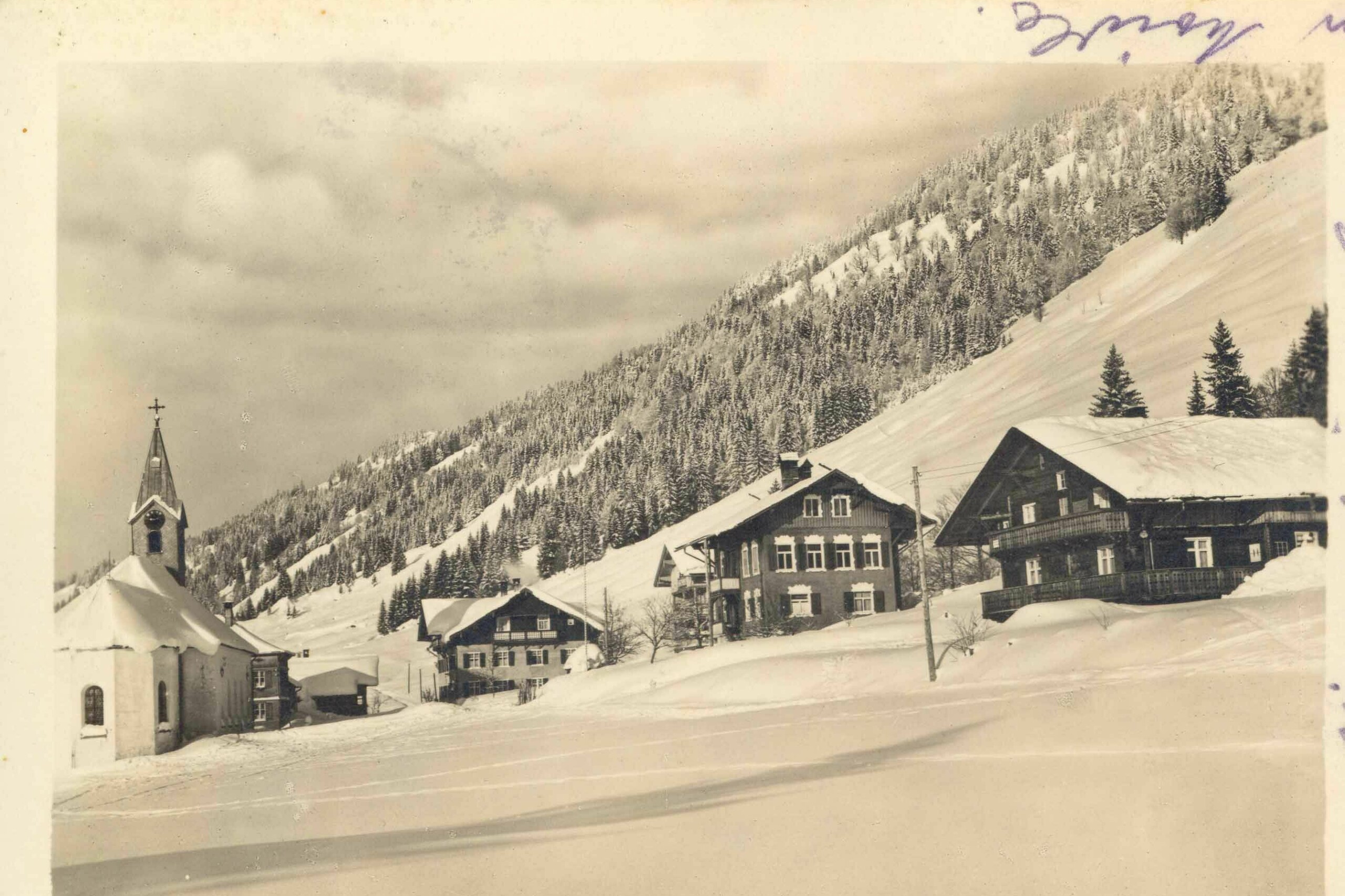
The Balderschwang High Valley remained wilderness well into the 13th century. It was only when farmers from Hittisau began searching for a place to graze their summer pasture livestock that they started clearing the valley, cutting down the vast forests, and rafting the timber down the Ach River toward Bregenz. As a result, the valley became lighter, brighter, and more fertile, allowing shepherds to use it for their young livestock during the summer.
The cleared areas were divided into grazing and pasture rights and used collectively in proportion to the number of head of cattle owned by each rights holder. The alp, which was presumably first cleared by a man named Balthasar Balder, gave the entire valley its name: Balders Wang.
The history of Balderschwang is, at first, identical to that of the lower Bregenzerwald. The Counts of Montfort of Feldkirch were the local rulers. It is said that the first wooden chapel for the shepherds, who spent the summer on the alp, was built as early as 1569. It was not until the 17th century that it became common for outsiders to purchase grazing rights and thereby acquire shares in the alpine pastures. The Weingarten Monastery was the first to take advantage of this and, in 1679, acquired the Riedberg Alp, also known as the Schwabenhof. The Weingarten steward began converting the monastery’s grazing lands into meadows, thereby creating the possibility of storing hay reserves. This made it possible to spend the winter on the monastery’s alp for the first time in 1684.
It was only from that time on that the valley was cultivated. The first settlers arrived. Among them were those who remained in the wilderness year-round. And in doing so, they laid the foundation for an independent community: Balderschwang.