Yoga and Mindfulness at HUBERTUS
AN INTERVIEW WITH YOGA INSTRUCTOR CHRISTINE RANZINGER
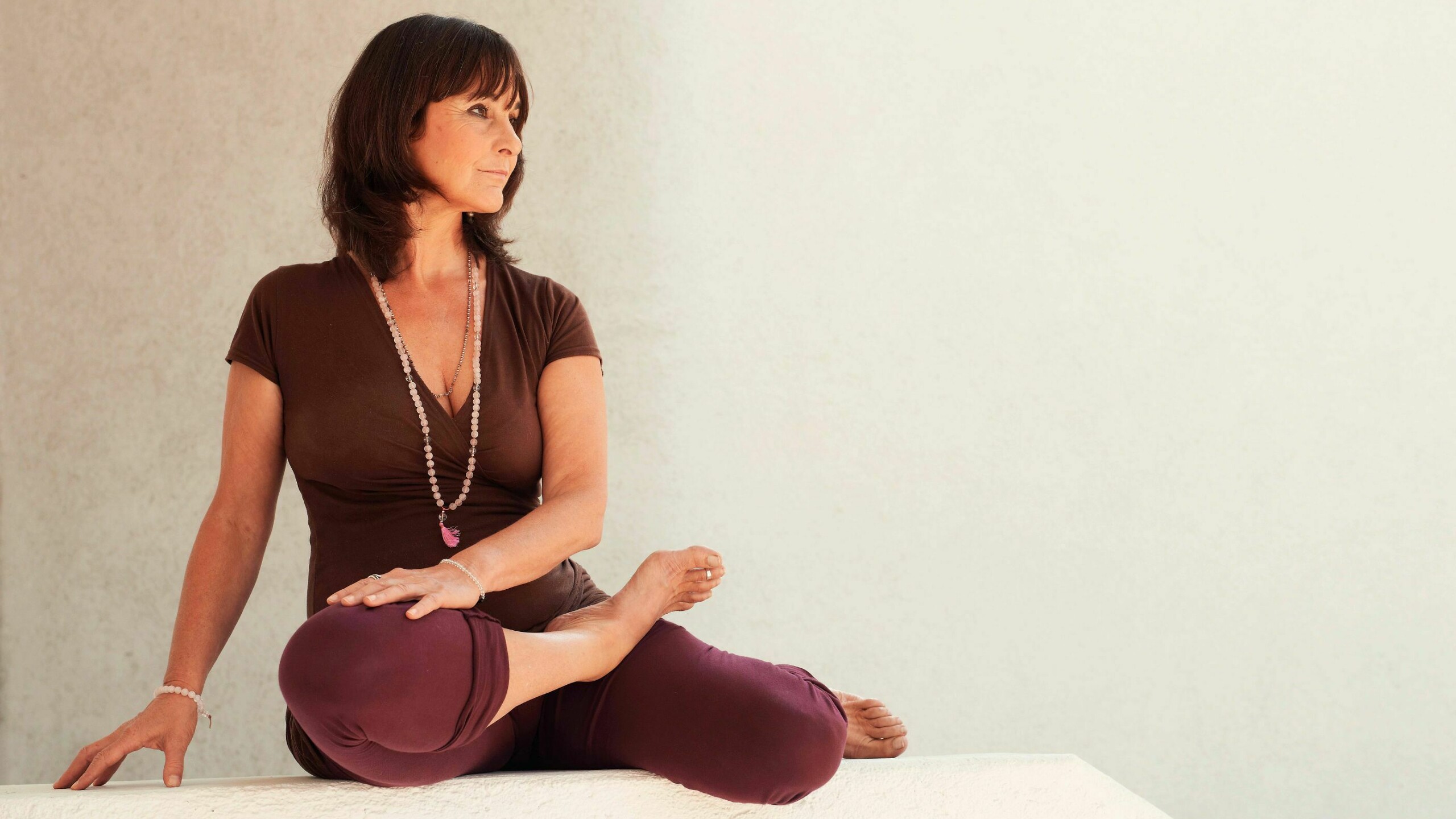
In the mood for some gentle yoga?! Yoga instructor Christine Ranzinger will be visiting us next week. For those of you who don't know her yet, she's answering a few questions about yoga, yin, and yang on our blog.
PLEASE DESCRIBE YOURSELF IN 3 SENTENCES
That’s a lovely question. I see myself as open-minded and always very curious about what life has to offer—including, for example, each and every one of my students. I enjoy being out in nature, sitting under a tree, and watching the clouds in the sky. I’m grateful for the many facets that life brings—and when life sometimes turns out differently than I imagine, I know it’s best to take a step back and rekindle that sense of gratitude within myself.
WHAT DOES YOGA MEAN TO YOU IN GENERAL?
For me, there’s really only one kind of yoga, in the true spirit of the ancient yoga texts—a state in which my mind becomes stiller, in which I feel the living stillness that is always present beneath my thoughts and feelings. The different styles of yoga are like doors that lead me into this state along different paths.
AND YIN AND YANG YOGA IN PARTICULAR? WHAT EXACTLY DOES THAT MEAN?
Yin is the quality of letting go; it means accepting myself just as I am. This mindset often carries over from the yoga mat into everyday life. Yang is more goal-oriented—for example, training the arm muscles to be able to hold a handstand for longer. Beyond the stimulation of bone metabolism that comes with it, I don’t necessarily see this as an expression of yoga.
IN YOUR OPINION, HOW MUCH YIN AND HOW MUCH YANG DOES YOGA NEED?
That depends entirely on the person practicing yoga. Life has become quite fast-paced and hectic in many areas, and many people are very goal-oriented. When we feel like we’re constantly running after ourselves, a gentle yoga practice is certainly beneficial, and during the long holds of the Yin poses, our nervous system regenerates and something within us relaxes, creating space for healing. At the same time, various aspects of our thoughts and feelings can become clearer. If, on the other hand, we tend to be lethargic or perhaps even prone to laziness, I definitely think an energizing Yang practice—perhaps based on the five elements of Traditional Chinese Medicine—is appropriate.
YIN YOGA HAS BECOME VERY POPULAR RECENTLY. HOW DO YOU EXPLAIN THIS TREND?
I think it has to do with the nature of our times. An immense shift is palpable on this planet, and we are connected to this process, whether we’re aware of it or not. We need breaks to feel ourselves, to strengthen our center, and to connect with our deepest core—which is also the very foundation of our being. And that’s exactly what the practice of Yin Yoga gives us: the time and space to become still, to feel, and, at the same time, to stretch the fascia and activate the chi in the meridians.
You’ve also made a name for yourself as an author. Your work often focuses on women’s yoga and gentle yoga. It’s good to emphasize that. Because sometimes I get the feeling that even yoga has turned into a kind of competitive sport. Or how do you see this trend?
We need Yin, and we need Yang. I think that a Yang-focused yoga practice makes perfect sense for some people—to really push themselves and feel their bodies. But I also believe it’s important for these elements to be complemented by Yin Yoga and conscious deep relaxation (Yoga Nidra), and I see that this is becoming more and more common. So it comes in waves…
WHAT IS PARTICULARLY IMPORTANT TO YOU IN YOGA?
First, the anatomically correct execution of the poses, and second, relevant background information on the energetic connections. It’s about everyone being able to do the poses in a way that’s good for their body. Letting go of an idealized image of what a pose should look like, because yoga is the journey, not the destination. Finding stillness. Coming home.
You travel to India once a year for several months. What inspires you most there in your work as a yoga teacher?
I love immersing myself in the familiar practices of yoga and meditation, meditating in ashrams, and simply having time to myself. This year, for example, I delved very deeply into the meditations of the Vijnana Bhairava Tantra while living in a cabin in the jungle by the sea. And that’s how elements for new books emerge “along the way.”
WHAT CAN THE PARTICIPANTS IN YOUR CLASS LOOK FORWARD TO IN PARTICULAR?
A wonderful break from everyday life, and a yoga practice whose elements we can integrate more deeply into our daily lives as needed. Gentle yoga, free from pressure to perform, that focuses on mindfulness in the present moment. A deeper exploration of yoga concepts that are relevant to each individual participant—because requests are always welcome.